
Bibigul Sarsenova, Kazakhstan
Introduction
Saiga antelope (Saiga tatarica tatarica L., 1766) – is one of the most ancient representatives of the mammoth fauna, survived to the present day. This migrating herd animal is a common specie of the steppes and semi-deserts of Eurasia, but now preserved only in Kalmykia, Kazakhstan, Uzbekistan and western Mongolia.
Within the framework of the Small Grants Program of Saiga Conservation Alliance, Public Association “Society and Environment” has been conducted activities for research and analysis of public attitudes to the problem of preservation Ural saiga population in Kaztalovskiy, Zhanibekskiy and Taskalinskiy districts of West Kazakhstan region of the Republic of Kazakhstan.
To implement the project: “Investigation and analysis of public attitudes to the problem of Ural saiga population preservation” we had the following tasks:
- informing the local population about the problem of conservation of these animals
- Carrying out a poll among the local population to identify the causes of poaching in the habitat of the Ural saiga population;
- Preparation of recommendations for the conservation and restoration of the Ural population
- Organizing and conducting tours to the Center Wildlife Conservation of biodiversity
- Organizing and conducting photo-tourism (to the Center for Wildlife Conservation of Biodiversity) with an exhibition of these photographs;
- Preparation and execution of the billboard;
- Maintenance and updating of the existing website: www.Saiga_west.kz
- Publication of materials about the problems of saiga conservation in national and local media.
- Show the result of the project on Saiga News and Saiga Resource Centre
This project is aimed at the implementation of the Medium-Term CMS work program for saiga conservation.
The research areas selected for this project Kaztalovsky (s.Karaoba) and Zhanibeksky (s.Akoba) districts, is characterized by mass gathering of saigas during migration time (sometimes up to 10 000 heads). In Taskalinskiy area adjacent to settlements a small group of saiga from 2000 (spring) to 200 (in the autumn) heads (according to the inspectors) was observed.
The conversation with the locals in these localities revealed that the most developed and prosperous in socio-economic terms is the village Amangeldy of Taskalinskiy area because of oil and gas stations located in the village, and a significant portion of the adult population work there. According to the villagers they don’t hunt saiga antelopes, but many of them have a permit to carry a weapon.
In the village Atameken a significant part of the population has a private courtyard, a small group of people work in the hospital, school and the Governor’s office. According to the survey and interviews with residents, this village can be attributed to the average level of socio-economic development.
One of the major settlements of Kaztalovskiy district, 63 km from the district center Kaztalovka Karaoba village (1275 citizents), all residents have a private courtyard, a certain group of self-employed (have a small business) and a group of people work in state institutions. According to residents, in the village cases of poaching were not observed.
Far from the town. Hakob (850 inhabitants) in Zhanybekskom area, 234 people provided with work, self-employed population group consists of up to 356 people. Survey respondents did not touch on the problem of poaching in their locality.
Conducted work is of great interest in the scientific and practical aspects that need further research in these and other settlements in the habitats of the Ural saiga population and funding.
The implementation of the project involved: the project manager, senior researcher at the Research Institute of the West Kazakhstan Agrarian Technical University named Zhangir Khan, PhD, Associate Professor, Sarsenova BB, Researcher, Master of Veterinary Science, doctoral PhD Usenov J. T., researcher, Master of veterinary Science Shonyraev MJ
- Inform local population about saiga conservation PROBLEM
Saiga – small antelope of Asian steppes, unique animal of the steppes and semi-deserts of Eurasia. Once the huge herds of saiga antelopes were grazing in the steppes of Eastern Europe and Asia. Now saiga is listed as critically endangered animal species, compiled by the International Union for Conservation of Nature.
With the collapse of the Soviet Union the uncontrolled extraction of saiga horns with a view to export to China began. The Chinese believed that amber male horns have medicinal properties. Finally antelopes on the brink of extinction.
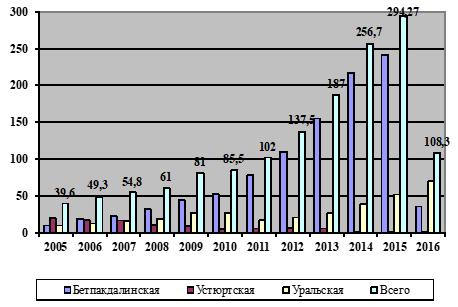
In 2005, Kazakhstan has introduced a moratorium on shooting saiga, which will operate until 2020. In 2014, the number of saiga reached 256.7 thousands individuals. The overall reduction of the number of saiga in Kazakhstan at the moment due to the continuing poaching and infectious diseases.
Over the last year Kazakhstan lost due to the death of more than 150 000 (2015) of Betpakdala saiga population, the number of these animals decreased by more than 2.5 times (Figure 1) and currently has about 108.3.
According to numerous publications dedicated to the saiga in recent years, it can be regarded as generally recognized that one of the reasons for this fall of population is poaching.
And now poaching of saiga is one of the decisive factors in reducing the number of ungulate populations. Despite the prohibition of hunting of the saiga (1999) and anti-poaching measures, cases of saiga shooting does not stop. The scale of poaching is difficult to quantify, but judging from the frequent media reports about the arrest of poachers with produced carcasses and horns parties, this phenomenon is still widespread.
So according to the Ministry of Inner Affairs of Kazakhstan in 2014 79 facts of illegal hunting of the saiga were recorded, the acquisition and sale of their horns, in 2015 – 107 facts and for 5 months of 2016 – 33 cases [1].
For the saiga poaching, illegal extraction, acquisition, storage, sale, import, export, transfer, transport, as well as the destruction of the saiga and (or) their parts and derivatives criminal liability, providing for imprisonment of up to three years with confiscation of property used as an instrument of illegal saiga production [2].
Also, a significant place is occupied and other factors (death from predators and epizootics, adverse effects of climate change, the transformation of habitats) [3,4,5,6,7].
As a result of pasteurellosis in 2015 from 242,500 Betpakdala saiga population, 206,300 animals died, or 85.1% of the population. According to aerial survey results, the total number of saiga in 2016 was 108 300 individuals, incl population Betpakdala population of 36,200 individuals, Ural population 70,200 individuals and the Ustyurt population of 1900 individuals’ -.. Said in a statement the Ministry of Agriculture [8].
Analysis of the experience gained in all countries of saiga range, leads to the fact that only through close contact with the locals, you can count on the success of certain measures for the protection of this species.
Taking into account the situation with the number of saigas in Kazakhstan work on saiga conservation in all areas needs to be carry out, including the propaganda work with the population of saiga habitat.
During the period of implementation of the project we conducted presentations, showed videos, gave campaign materials (booklets, calendars) to the students and local community. We gave information about saiga conservation as well as about activities of the Center for Biodiversity Conservation of wild animals (Figure A 2, 3).
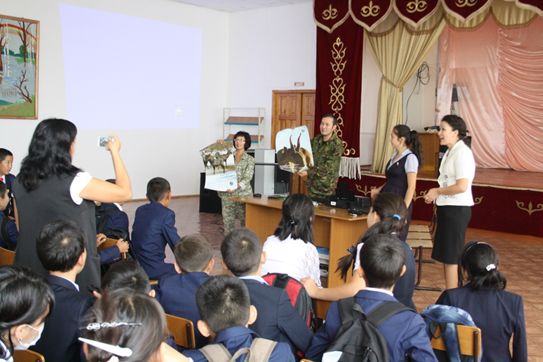
Taskaly village.
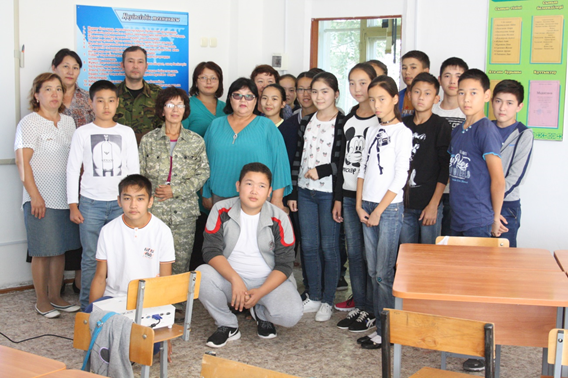
One of the methods of conservation and restoration of rare and endangered animals, including saigas can be the content in captivity – kennels, zoos [9,10].
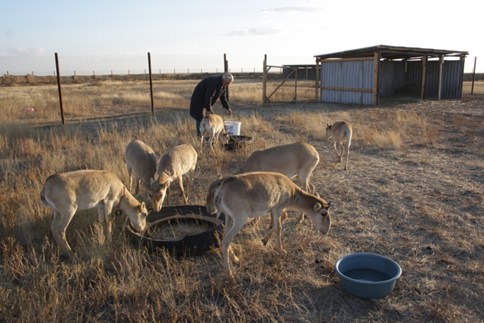
In 2012 – 2014 years for the first time in Kazakhstan, funded by Science Committee of the Ministry of Education and Science a nursery for saiga breeding was established for conservation of the specie. In 2015, on the basis of the nursery Biodiversity Center of wild animals began its work. Currently enclosures nursery area has reached three hectares. Place for nursery home – Taskalinsky area – is not accidental, it is located in the native steppe, where the population of wild saiga (Figure 4) lives.
The first saigas in the nursery were from the natural population. Calves from the natural environment were caught for scientific purposes by special permission of the Ministry of the Republic of Kazakhstan. Currently, the center has 19 saigas, during two years 12 calves were born in captivity. In the future, scientists will study the possibility of a gradual release into the wild Saiga born and raised in captivity, their adaptation to life without human support.
2. Methods of social research
In previous studies by the Russian, Uzbek and British experts the basic idea and design of the questionnaire was developed, which were taken as the basis of our work, with some modifications and additions. The study used one type of profiles, combined survey on the living standards of the population, with questions about the attitude towards the problems of saiga conservation.
The methodology used in sociological research in Kalmykia (2003) and Uzbekistan (2004), within the Darwin project.
The questionnaire consists of 10 questions. Fundamentals of profiles were taken from Forrest () from the survey questions conducted by ACBK. Basically, there were numerous types of answers to some questions – people needed to choose one. Two questions consisted of a “yes” response or “no” to the possibility of writing their views.
We conducted a poll among the local population of Taskalinskiy (p. Amangeldy with. Atameken), Kaztalovskiy (s.Karaoba) and Dzhanybekskiy (s.Akoba) areas, in order to assess the level of public knowledge about the saiga and identify their relationship to the problem of preservation and causes of poaching for Saiga.
In the first part of the questionnaire questions aimed at studying the standard of living, employment, income, etc. were given. The second part of the questionnaire highlighted the attitude of the local population to the Saiga, including questions such as: Do you know about any activities aimed at the management of the Ural saiga population? Who organizes them? What is the cause of saiga hunting? What should be done to save the saiga in the future? and others.
2.1 Socio-economic status of settlements and Kaztalovskogo Zhanybekskogo areas
Village Karaoba Kaztalovskogo district has 1275 inhabitant, just 311 homes, the adult population of 612, of which 141 pensioners, 433 working people, the unemployed -72 people, 610 people belong to the group of the economically active population.
The population of the village Hakob Zhanybekskogo area is 850 people, 234 people employed, self-employed – 353, only 6 people unemployed, the number of economically active population is 593.
When conducting a sociological survey, we tried to identify the relationship between poaching levels and a decrease in employment and welfare of people living in the studied villages.
In oral conversation and questioning residents were not obtained data on the occurrence of Saiga, changes in its size, the level of poaching and hunting period techniques, respondents to the leading questions are not answered (“do not know”) or giving evasive answers.
As part of the study, attempts were made to solve three interrelated objectives: to identify the degree of local community awareness of issues related to the protection and restoration of saiga; inform the local population about the current state of the saiga in Kazakhstan, including the activities of the center for the conservation of wildlife conservation; get information from the locals about their knowledge of saiga, the current situation and possible ways to improve saiga protection.
A sociological survey was conducted on the basis of pre-prepared questionnaires with the locals in the places of their permanent residence within the three districts Taskalinskogo (in settlements Amangeldy, Atameken), Zhanibekskogo (Hakob) and Kaztalovskogo (Karaoba), home to the Ural saiga population. In total 141 respondents were interviewed. The survey was carried out, moving around the villages by car. During the interviews, we tried to achieve mutual understanding and trust, as we needed no formal responses to the questionnaire, and objective data on understanding the local people of the situation, ways out of it and evaluating the effectiveness of measures taken.
For greater reliability of this survey at the request of the respondents received information is anonymous, although even in this case, the respondents often began a conversation with fear and replied to the questions evasively. Yet confidence is usually able to overcome the barrier. Many of the survey questions were framed in such a way that allow ambiguous answers. If the question for the respondent was difficult, it was suggested a few possible answers from which he can choose a specific or develop on its basis his version. Of course, as a result, we are faced with a wide variety of responses, making it difficult to further process the completed questionnaires. But it was justified, as possible to obtain a fairly complete idea of what the local population thinks about the falling numbers and possibilities for saiga conservation.
Analysis of the socio-economic situation in the region has revealed the following. The level of education: 40.4% of the inhabitants of four villages have secondary education, higher and secondary special education is only 33.8% of respondents. (Tab. 1, Fig. 1).
Of those surveyed 22 respondents from Taskalinskogo Amangeldy district, 11 people (50%) have higher education, half of the surveyed residents from the village. Karaoba Kaztalovskogo area, have only secondary education and only 9 people have higher education.
Analysis of the socio-economic situation of Human Settlements under the questioning revealed the following:
Amangeldy village: 11 respondents have higher education, representing 50% of all population, vocational college – 3 (13.5%), only school – 8 (36.5%). Overall number of respondents – 22;
Akoba village: people who have higher education – 11 (27.5%), vocational -12 (30%), only school – 14 (35%), incomplete higher education – 1 (2.5%), lower secondary – 2 (5%);
Karaoba village: higher education 9 people (19,6%), vocational college- 8 (17,4%), only school – 14 (35%), incomplete higher education – 2 (4,4%), lower secondary – 4 (8,6%).
Atameken village: higher education – 13 (39,3%), vocational – 6 (18,2%), only school – 12 (36,4%), incomplete higher education – 2 (6,1%).
| Village | higher education | vocational college | only school | incomplete higher education | Incomplete school | Overall |
| Amangeldy | 11 | 3 | 8 | – | – | 22 |
| % | 50 | 13,5 | 36,5 | – | – | 100 |
| Akoba | 11 | 12 | 14 | 1 | 2 | 40 |
| % | 27,5 | 30 | 35 | 2,5 | 5 | 100 |
| Karaoba | 9 | 8 | 23 | 2 | 4 | 46 |
| % | 19,6 | 17,4 | 50 | 4,4 | 8,6 | 100 |
| Atameken | 13 | 6 | 12 | 2 | – | 33 |
| % | 39,3 | 18,2 | 36,4 | 6,1 | – | 100 |
| Overall | 44 | 29 | 57 | 5 | 6 | 141 |
| % | 31,2 | 20,6 | 40,4 | 3,5 | 4,3 | 100 |
The survey on the level of employment of the respondents identified the following:
| Village | Unemployed | Working people | Retirees | Students | schoolchildren | overall |
| Amangeldy | 2 | 18 | 2 | – | – | 22 |
| % | 9,1 | 81,8 | 9,1 | – | – | 100 |
| Akoba | 4 | 34 | 1 | 1 | – | 40 |
| % | 10 | 85 | 2,5 | 2,5 | – | 100 |
| Karaoba | 10 | 28 | 5 | 1 | 2 | 46 |
| % | 21,7 | 60,9 | 10,8 | 2,2 | 4,4 | 100 |
| Atameken | 5 | 24 | 3 | 1 | – | 33 |
| % | 15,2 | 72,7 | 9,1 | 3 | – | 100 |
| Overall | 21 | 104 | 11 | 3 | 2 | 141 |
| % | 14,8 | 73,8 | 7,8 | 2,2 | 1,4 | 100 |
The source of income of the respondents is the housekeeping, and a small proportion of private business (commercial activity). A stable source of income is government salaries and pensions. There are families who have declared that they have financial difficulties and are in need of improving living standards (Fig. 6).
Data on the level of respondents’ income on settlements:
| Village | Less than 20 000 тг | from 20 000 to 40 000 тг | From 40 000 to 60 000 тг | from 60 000 to 80 000 тг | More than 80 000 тг | overall |
| Amangeldy | 2 | 9 | 6 | 4 | 1 | 22 |
| % | 9,1 | 40,9 | 27,3 | 18,2 | 4,5 | 100 |
| Akoba | 14 | 12 | 4 | 5 | 5 | 40 |
| % | 35 | 30 | 10 | 12,5 | 12,5 | 100 |
| Karaoba | 16 | 13 | 9 | 4 | 2 | 44 |
| % | 36,5 | 29,6 | 20,4 | 9,0 | 4,5 | 100 |
| Atameken | 9 | 8 | 8 | 6 | 2 | 33 |
| % | 27,3 | 24,2 | 24,2 | 18,2 | 6,1 | 100 |
| Overall | 41 | 42 | 27 | 19 | 10 | 139 |
| % | 29,5 | 30,2 | 19,4 | 13,7 | 7,2 | 100 |
*2 respondents were schoolchildren
With the purpose to identify local attitudes to saiga conservation issue, respondents were asked the following questions:
“How do you feel about the following statements? Like other residents of our village, I realize the importance of the problem for saiga protection “. The following responses were received:
| Village | I agree | I disagree | I’m not sure | Neutral | Abstain | Overall |
| Amangeldy | 19 | – | – | – | 3 | 22 |
| % | 86,4 | – | – | – | 13,6 | 100 |
| Akoba | 32 | 1 | 1 | – | 6 | 40 |
| % | 80 | 2,5 | 2,5 | – | 15 | 100 |
| Karaoba | 37 | – | – | 2 | 7 | 46 |
| % | 80,4 | – | – | 4,3 | 15,3 | 100 |
| Atameken | 31 | 1 | – | 1 | – | 33 |
| % | 93,9 | 3,05 | 3,05 | 100 | ||
| Overall | 119 | 2 | 1 | 3 | 16 | 141 |
| % | 84,4 | 1,4 | 0,7 | 2,1 | 11,4 | 100 |
To the question “How do you feel about the following statements? Most of the adult population of our village believes that the saiga hunting is permitted “(item questionnaire 2.2), the following responses were received:
| Village | Disagree | Agree | I’m not sure | Neutral | Abstain | Overall |
| Amangeldy | 14 | – | – | – | 8 | 22 |
| % | 63,6 | – | – | – | 36,4 | 100 |
| Akoba | 25 | 5 | – | 1 | 9 | 40 |
| % | 62,5 | 12,5 | – | 2,5 | 22,5 | 100 |
| Karaoba | 31 | 1 | – | 1 | 13 | 46 |
| % | 67,4 | 2,2 | – | 2,2 | 28,2 | 100 |
| Atameken | 25 | – | 1 | – | 7 | 33 |
| % | 75,8 | – | 3,0 | – | 21,2 | 100 |
| Overall | 95 | 6 | 1 | 2 | 37 | 141 |
| % | 67,4 | 4,3 | 0,7 | 1,4 | 26,2 | 100 |
To the question “How do you feel about the following statements? Most of the adult population of our village said that the consumption of saiga meat is unacceptable “(item questionnaire 2.3), the following responses were received:
| Village | I agree | I disagree | I’m not sure | Neutral | Abstain | Overall |
| Amangeldy | 13 | – | – | – | 9 | 22 |
| % | 59,1 | – | – | – | 40,9 | 100 |
| Akoba | 21 | 9 | – | 1 | 9 | 40 |
| % | 52,5 | 22,5 | – | 2,5 | 22,5 | 100 |
| Karaoba | 24 | 8 | 1 | 1 | 12 | 46 |
| % | 52,2 | 17,4 | 2,2 | 2,2 | 26,0 | 100 |
| Atameken | 18 | 4 | 1 | 2 | 8 | 33 |
| % | 54,7 | 12,1 | 3,0 | 6,0 | 24,2 | |
| Overall | 76 | 21 | 2 | 4 | 38 | 141 |
| % | 53,9 | 14,8 | 1,4 | 2,8 | 27,1 | 100 |
A survey of public awareness of the activities for the protection of the Ural saiga population and the organizers showed the following results:
| Village | Territorial Inspection (belong to the Forestry and Wildlife Committee) | Okhotzooprom | Police | Mass media | Inspectors (people don’’ know exactly what organization) | Other | Abstain | Overall |
| Amangeldy | 8 | 5 | – | – | 3 | 6 | – | 22 |
| % | 36,4 | 22,7 | – | – | 13,6 | 13,6 | – | 100 |
| Akoba | 19 | 6 | 1 | – | 3 | 3 | 8 | 40 |
| % | 47,5 | 15 | 2,5 | – | 7,5 | 7,5 | 20,0 | 100 |
| Karaoba | 23 | 13 | 2 | – | 2 | 3 | 3 | 46 |
| % | 50,1 | 28,3 | 4,3 | – | 4,3 | 6,5 | 6,5 | 100 |
| Atameken | 21 | 5 | – | – | – | 7 | – | 33 |
| % | 63,6 | 15,2 | – | – | – | 21,2 | – | 100 |
| Overall | 71 | 29 | 3 | – | 8 | 19 | 11 | 141 |
| % | 50,4 | 20,6 | 2,2 | – | 5,6 | 13,4 | 7,8 | 100 |
Data for the study of local residents’ opinion on the main causes of threats for saiga population in the West Kazakhstan region showed the following:
| Village | Climate change | Development of infrastructure | Hunting | Predators | Illnesses | Other | Abstain | overall |
| Amangeldy | 4 | – | 11 | – | 5 | 2 | – | 22 |
| % | 18,2 | – | 50,0 | – | 22,7 | 9,1 | 100 | |
| Akoba | 3 | 1 | 26 | 2 | 6 | 1 | 1 | 40 |
| % | 7,5 | 2,5 | 65 | 5 | 15,0 | 2,5 | 2,5 | 100 |
| Karaoba | 10 | – | 24 | 2 | 8 | 1 | 1 | 46 |
| % | 21,7 | – | 52,2 | 4,3 | 17,4 | 2,2 | 2,2 | 100 |
| Atameken | 7 | 1 | 18 | – | 7 | – | – | 33 |
| % | 21,25 | 3,0 | 54,5 | – | 21,25 | – | – | 100 |
| Overall | 24 | 2 | 79 | 4 | 26 | 4 | 2 | 141 |
| % | 17 | 1,5 | 56 | 2,8 | 18,4 | 2,8 | 1,5 | 100 |
Data for the study of the views of local residents on possible targets of saiga hunting in West Kazakhstan region showed the following:
| Village | Main source of income | Additional source of income | For food (meat) | Entertainment | Abstain | overall |
| Amangeldy | 6 | 5 | 1 | 9 | 1 | 22 |
| % | 27,4 | 22,7 | 4,5 | 40,9 | 4,5 | 100 |
| Akoba | 11 | 15 | 1 | 11 | 2 | 40 |
| % | 27,5 | 37,5 | 2,5 | 27,5 | 5,0 | 100 |
| Karaoba | 15 | 14 | – | 16 | 1 | 46 |
| % | 32,6 | 30,4 | – | 34,8 | 2,2 | 100 |
| Atameken | 9 | 7 | 1 | 14 | 2 | 33 |
| % | 27,3 | 21,3 | 3,0 | 42,4 | 6,0 | 100 |
| Overall | 41 | 41 | 3 | 50 | 6 | 141 |
| % | 29,1 | 29,1 | 2,1 | 35,4 | 4,3 | 100 |
Among the possible reasons for hunting saiga respondents indicated the following:
| Village | Unemployment | Bad work of the inspectors | Existing laws are not severe enough | Public impact | Other | Abstain | Overall |
| Amangeldy | 5 | 4 | 10 | – | 2 | 1 | 22 |
| % | 22,8 | 18,2 | 45,4 | – | 9,1 | 4,5 | 100 |
| Akoba | 12 | 9 | 12 | 4 | – | 3 | 40 |
| % | 30 | 22,5 | 30 | 10 | – | 7,5 | 100 |
| Karaoba | 21 | 2 | 15 | 4 | 2 | 2 | 46 |
| % | 45,8 | 4,3 | 32,6 | 8,7 | 4,3 | 4,3 | 100 |
| Atameken | 9 | 3 | 8 | 7 | 5 | 1 | 33 |
| % | 27,3 | 9,1 | 24,2 | 21,2 | 15,2 | 3,0 | 100 |
| Overall | 47 | 18 | 45 | 15 | 9 | 7 | 141 |
| % | 33,3 | 12,7 | 32 | 10,6 | 7,2 | 4,2 | 100 |
The question: Will anything change for you if saigas disappeared? Why? The answers were as follows: 17% said yes, 10.6% said no, 58.3% did not know the answer, 9.9% indicated another 4.2% abstained (tab.11, Figure 9).
| Village | Yes | No | Don’t know | Other | Abstain | Overall |
| Amangeldy | 4 | 2 | 14 | 2 | – | 22 |
| Akoba | 5 | 7 | 26 | – | 2 | 40 |
| Karaoba | 4 | 6 | 28 | 7 | 1 | 46 |
| Atameken | 11 | – | 14 | 5 | 3 | 33 |
| Overall | 24 | 15 | 82 | 14 | 6 | 141 |
| % | 17 | 10,6 | 58,3 | 9,9 | 4,2 | 100 |
On the survey question: Have YOU ever or anyone close to you, ever hunt saiga antelopes?
| Village | Yes | No | Don’t know | Other | Abstain | Overall |
| Amangeldy | 1 | 20 | 1 | – | – | 22 |
| Akoba | – | 34 | 6 | – | – | 40 |
| Karaoba | – | 43 | 2 | – | 1 | 46 |
| Atameken | – | 29 | 3 | – | 1 | 33 |
| Overall | 1 | 126 | 12 | – | 2 | 141 |
| % | 0,7 | 89,3 | 8,5 | – | 1,5 | 100 |
Measures required in the future to save the saiga according to respondents:
| Village | To conduct good explanatory conversations | Toughen laws on saiga conservation | Organize a captive breeding centers for saigas | Kill wolves | To improve the level of life of local communities | Participate in saiga conservation events | Other | Overall |
| Amangeldy | 8 | 12 | 2 | – | – | – | – | 22 |
| % | 36,4 | 54,5 | 9,1 | – | – | – | – | 100 |
| Akoba | 4 | 14 | – | 8 | 2 | 6 | 6 | 40 |
| % | 10 | 35 | – | 20 | 5 | 15 | 15 | 100 |
| Karaoba | 16 | 18 | 2 | 2 | 5 | 1 | 2 | 46 |
| % | 34,8 | 39,1 | 4,4 | 4,4 | 10,7 | 2,2 | 4,4 | 100 |
| Atameken | 11 | 13 | 3 | 2 | 1 | 2 | 1 | 33 |
| % | 33,3 | 39,3 | 9,1 | 6,1 | 3,05 | 6,1 | 3,05 | 100 |
| Overall | 39 | 57 | 7 | 12 | 8 | 9 | 9 | 141 |
| % | 27,5 | 40,5 | 4,9 | 8,6 | 5,7 | 6,4 | 6,4 | 100 |
The question: Do you think if there is hunting on saiga in the territory adjacent to your village? The answer follows:
| Village | Yes | No | Don’t know | Other | Abstain |
| Amangeldy | 3 | 11 | 8 | – | 22 |
| % | 13,6 | 50,0 | 36,4 | 100 | |
| Akoba | 2 | 18 | 18 | 2 | 40 |
| % | 5 | 45 | 45 | 5 | 100 |
| Karaoba | 5 | 15 | 22 | 4 | 46 |
| % | 10,8 | 32,6 | 47,8 | 8,8 | 100 |
| Atameken | 5 | 20 | 6 | 2 | 33 |
| % | 15,2 | 60,6 | 18,2 | 6,0 | 100 |
| Overall | 15 | 64 | 54 | 8 | 141 |
| % | 10,6 | 45,4 | 38,4 | 5,6 | 100 |
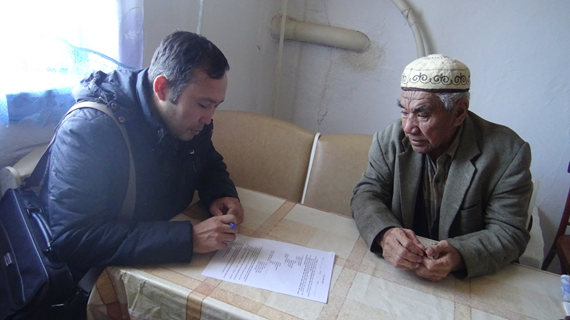
During our survey we provided materials (information) about the current state of the Ural saiga population, about their ecological role in habitats, about the existing legislative framework ensuring protection of saiga. Presentations were held among the local population in order to promote conservation and protection of saiga. Also, handouts were distributed to local residents interviewed.
In conclusion, it should be noted that according to our data of social research the local population has a positive attitude to the ongoing activities aimed at the preservation of these unique animals and agrees to take active part in them. It is therefore necessary to undertake educational and propaganda work among the population. It is necessary to create projects aimed to ensure public participation in government decision-making on the conservation of saiga, and within its framework to disseminate the idea of conservation of saiga habitat.
It should be noted that only the joint efforts of the state and non-governmental organizations, with the support of the local population can stop the decline in the number of saiga in Kazakhstan.
Of course, informing the public about the real state of saigas has no effect unless it is complemented by the search for alternative solutions to fight poaching and solve economic problems. The situation is exacerbated by social factors – the absence of real sources of income and unemployment in the region. Mass unemployment and the benefit from the sale of horns create socio-economic basis for the stimulation of many segments of the population in the criminal hunting.
Real improvements in the conservation of the Ural saiga population can be achieved only with the active participation of all sectors of the population. The degree of activity of the population in environmental issues, in turn, depends on the level of development of social consciousness and environmental awareness of its state of the environment.
It must be borne in mind that a significant part of the population is outside the sphere of influence of the educational system. In the formation of the ecological consciousness of the population state and public institutions and organizations engaged in environmental activities, as well as the media are crucial.
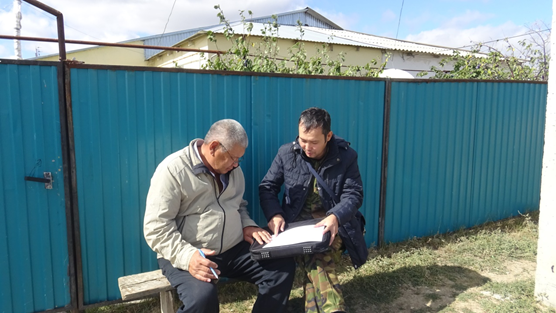
In this case, we assume that for the part of local residents indifferent attitude to the saiga is a consequence of a lack or total absence of relevant information. During the conversations with the locals, we firstly tried to determine whether our assumption is valid. In particular, given that poaching is a violation of the law, special attention was paid to the elucidation of knowledge of local people the extent of their liability for the violation
3.Organization and implementation of project activities
3.1 Excursion to the Center for Wildlife biodiversity Conservation
In late August of this year, young naturalists from the ecological and biological center of West Kazakhstan region have visited the Center for Wildlife biodiversity Conservation – in a kennel for breeding and maintenance of the Ural saiga population. Trip Organizer: Public Association “Society and Environment” with financial support of the Saiga Conservation Alliance.
Thanks to this project people and students got acquainted with the work of the nursery, which is located in the Taskalinskiy district.
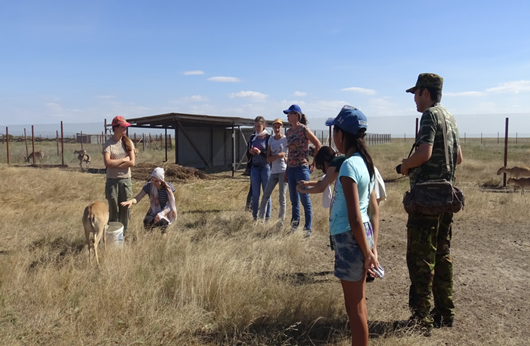
The children visited a mobile laboratory, through which scientists and workers of this center conducted observation of the animals, the scientific and veterinary studies; children also watched the films and photographs of the nursery of life, became acquainted with the nursery staff, concerned about the further fate of the saiga.
Currently, work of this Center is funded by university named after Zhangir Khan and on the commitment of university staff. One hope is that in future the project will be supported at the state level.
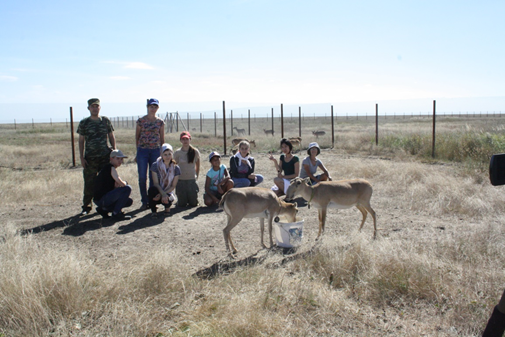
Photo tourism and children
Education of photo art for children is interesting and useful, will help develop the ability to express themselves creatively, to find his place in life.
This is a really exciting experience – photographing the animals, especially wild animals, even if they are in a cage. The ability to take pictures correctly and competently, and it probably comes with practice and years. But there is a special category of people who love nature. One of such people is a deputy director of Samara Zoo professional photographer Alexander Kuzovenko.
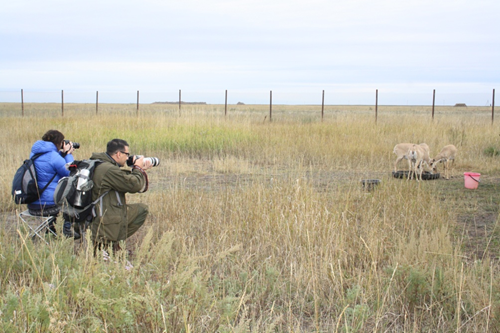
Irina Lugovyh, a Project Manager, who devotes all his time to photograph, agreed to participate in the excursion and teach children some basic things about this process.
Children received a special joy and pleasure of communicating with animals, and professional photographers. It was the students of 7-8 grades of secondary education school from Amangeldy village district Taskalinskiy. In this school, there was a presentation of our project and we showed the video on the activities of our Center. Students asked about how we take care of the animals, and why saiga horns are used, whether there is in the world an alternative to saiga horns. One student described how in one courtyard somebody kept little saiga, and although watered milk, he died four days later.
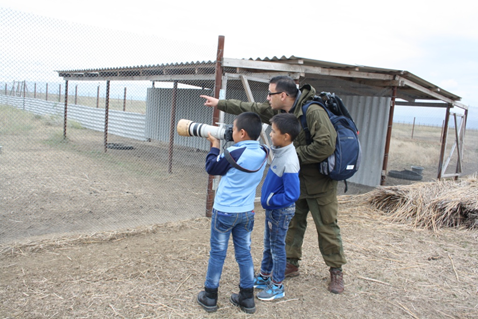
Kuzovenko showed and told children about photo camera, how to keep it and to take photos of the animal in motion, at the same time take into account the distance, the light direction and exposure when photographing saiga.
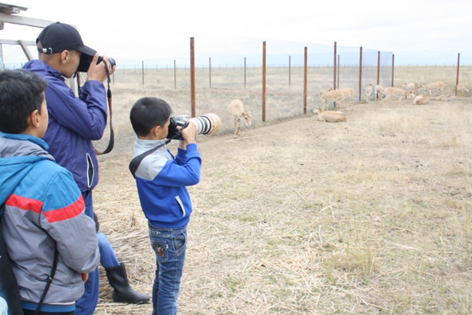
All children expressed their gratitude and appreciation for the organization of excursions with elements of ptographing animals. In gratitude, the children brought a package of grain for saiga.
3.3 The photo exhibition at the Center of Culture and Art
named after Kadir Mirza Ali
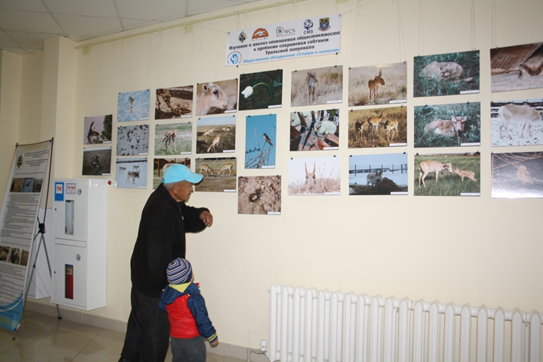
September 16, 2016 a photo exhibition called “The Nature of Kazakhstan through the eyes of Russians” was opened In the Center of Culture and Arts named after Kadir Mirza Ali. The exhibition was dedicated to the 25th anniversary of Independence of the Republic of Kazakhstan in the framework of international cooperation in the field of culture and art. The organizers of the exhibition are Samara Zoo, Environmental and Biological Education Management Center and Public Association “Society and Environment”.
The purpose of the photo exhibition was to attract media attention and the public not only to the problem of saiga conservation but to the whole wildlife of Kazakhstan.
Photos saiga skull fragment with horns and without horns presented by the Public Association “Society and Environment”, caused great interest of visitors.
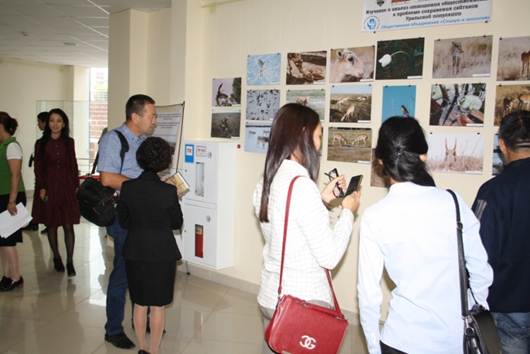
Many visitors do not know about the existence of nursery for keeping and breeding of saiga antelopes in Kazakhstan, most stakeholders have received booklets and CDs with video about our work.
CONCLUSION
For rural schools of Taskalinskiy (p. Amangeldy and Atameken), Zhanybekskiy (s.Akoba) Kaztalovskiy (p. Terenkol) areas, as well as regional centers Taskala with Kaztalovka we conducted presentation of the project and highlight the activities of the Center for Biodiversity Conservation of wild animals.
We also conducted guided tours to the territory of the existing nursery of keeping and breeding of saigas (Center for Wildlife Conservation of Biodiversity) in Taskalinskiy district, West Kazakhstan region.
Also we organized and conducted tour of the photo-tourism with school pupils from Amangeldy village and professional photographers.
In the Center of Culture and Arts named Mirza Ali Qadir we held a photo exhibition on the project with an exhibition of photographs of saiga antelopes and other animals, the birds of our region, as well as exhibited skull fragments of saigas.
From 8 to 24 September 2016 the Public Association “Society and Environment”, held the event on the social survey of the local population for the study and analysis of public attitudes to the problem of saiga conservation in Kaztalovskom, Zhanibekskom and Taskalinskom areas. In total 141 respondents were interviewed.
According to the results of the project in the local media an interview called “Save the Saiga” and an article in the National Conference “Ivanovo reading” was published, as well as performance on TV “Oral-Kazakhstan”. Mazyarkina, the head of the wildlife department of the regional ecological and biological center, published an article “Save the saiga together” in the national magazine “Ekoelem”.
With the financial support of the project website: www.Saiga-west.kz was reinstated, where on the page “News” stages of the project were presented.