
About saigas
Saiga policy & protection
The international agreements and national efforts that help protect saigas across their range.
Protecting saigas requires action at both national and international levels. Their movements across vast landscapes, sometimes crossing borders, and the international trade in their horns create challenges that countries must address together. International agreements provide a framework for coordinating conservation and regulating trade, while national laws and conservation measures put protection into practice.
The framework
International agreements
Convention on Migratory Species (CMS)
The Convention on Migratory Species (CMS) is an international agreement that supports the conservation of migratory animals through cooperation between countries. Saigas are listed on Appendix II, which recognises them as a species that would benefit from international cooperation.
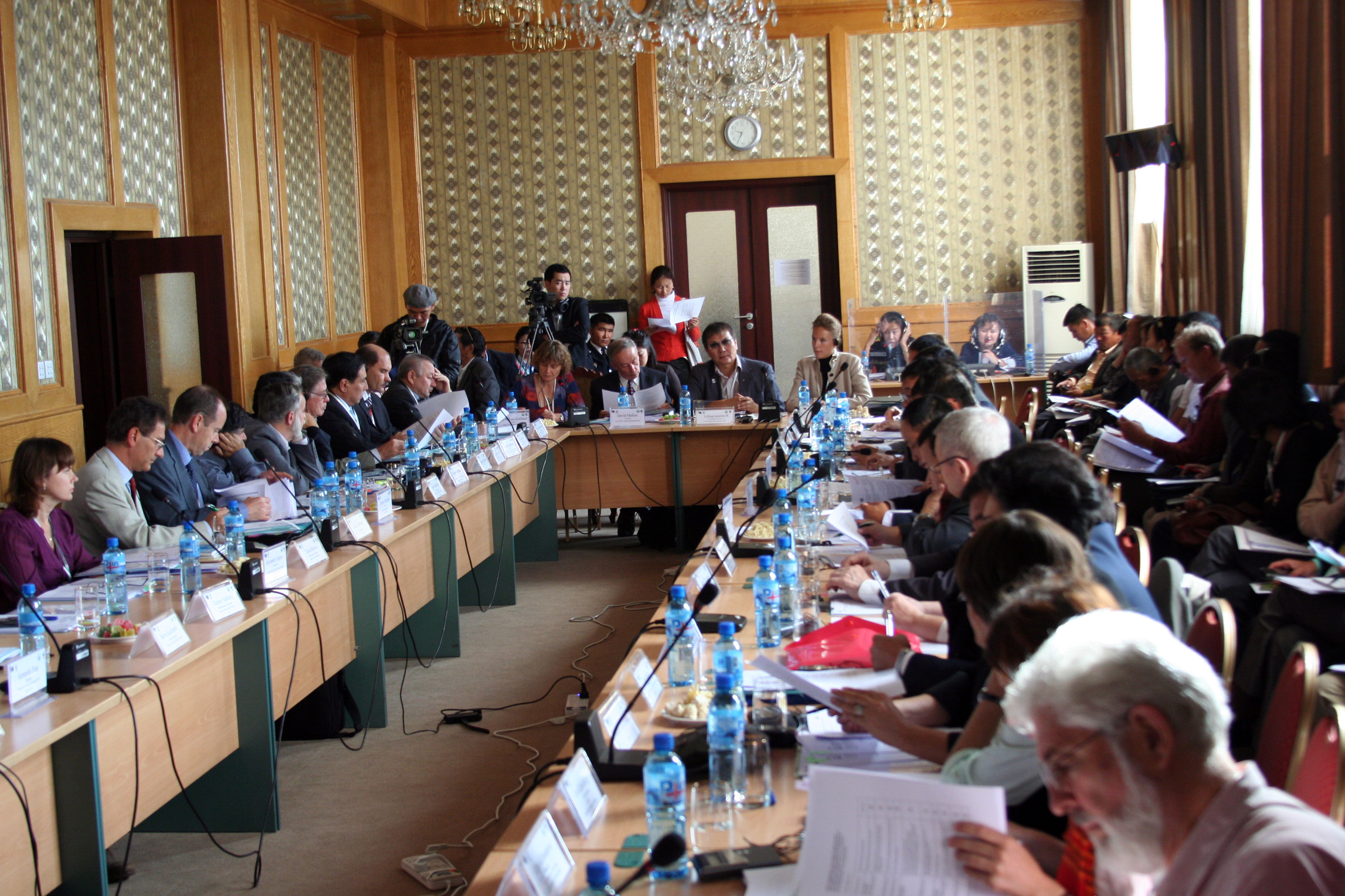
Under CMS, countries across the saiga’s range work together through the Saiga Memorandum of Understanding (MoU), established in 2006. A Medium-Term International Work Programme (MTIWP), produced every five years, sets shared conservation priorities and helps coordinate action.
SCA contributes scientific and conservation expertise, helps shape shared priorities, and supports efforts to put the work programme into practice.
Convention on International Trade in Endangered Species (CITES)
CITES is an international agreement that regulates trade in wild animals, plants, and their products to ensure that it does not threaten their survival. Saigas are listed on Appendix II, which means international trade in the species and its products, particularly horns, is controlled. Appendix II does not prohibit trade outright, but generally requires export permits and evidence that trade will not harm wild populations.
In 2019, CITES Parties voted to introduce a zero export quota, stopping commercial exports of wild-sourced saigas and their products. The decision followed decades of population declines, partly driven by poaching for horns. By 2025, substantial growth in Kazakhstan’s saiga numbers had changed the context for this restriction. CITES Parties agreed to a limited exception, allowing certain horns held in government stockpiles to be exported under strict conditions intended to protect wild populations. The zero export quota remains in place for other commercial exports of wild-sourced saigas and their products.
National protection
Saigas are also protected through national laws and conservation measures in the countries where they occur. Depending on the country, these may include hunting restrictions, protected areas, population monitoring, law enforcement, and measures to reduce conflict with local communities.
Protection and management vary across the saiga’s range, reflecting different populations, threats, and national priorities. Governments are responsible for putting these measures into practice, supported by the international cooperation established through CMS and CITES.
How the system fits together
CMS helps countries coordinate saiga conservation across borders, CITES regulates international trade, and national governments put protection into practice through their own laws and conservation measures. Together, these provide a framework for addressing threats that no single country can tackle alone.
You may also be interested in
Support our work
Help keep saigas on the steppe
Every donation contributes to vital conservation work, from protecting saigas in the wild to advancing research, education, and international cooperation.
Your support helps make saiga conservation possible.