
Project
Captive Breeding Programme and International Network
Captive breeding has long been part of the wider discussion about saiga conservation, but keeping and breeding saigas successfully in specialist centres is technically difficult. Different institutions had built up valuable experience, yet much of that knowledge remained dispersed between breeding centres, zoos, researchers, and conservation organisations in different countries.
SCA’s role was to help bring that expertise together and connect captive breeding more clearly with the conservation needs of the species.
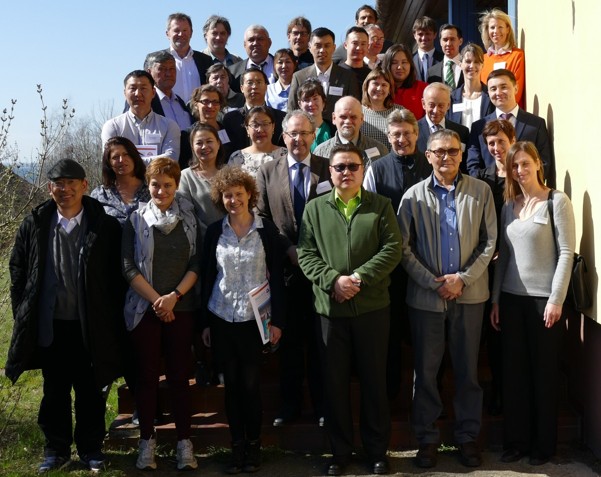
On 28-29 August 2017, SCA, the Russian Academy of Sciences’ Institute of Ecology and Evolution, and San Diego Zoo hosted a major two-day international workshop in Moscow. The meeting brought together representatives from the saiga range states, China, the United States, and Europe, alongside Russian government officials, European and American zoos, and international conservation organisations including IFAW, WCS, and WWF.
The workshop was deliberately strategic. Participants exchanged practical experience of keeping and breeding saigas, considered the role that specialist breeding centres could play in species conservation, and worked towards a more coordinated approach to ex-situ conservation. Plans were also developed for closer collaboration with European and American zoos.
One of the most important outcomes was a commitment to create an international network of captive-breeding professionals, allowing people working with saigas in different institutions to continue sharing knowledge, problems, and best practice after the Moscow meeting. The network began under the coordination of Jeff Holland of the Centre for the Conservation of Tropical Ungulates.
For SCA, the importance of this work was not simply increasing the number of saigas in captivity. It was about ensuring that specialist centres could learn from one another and that captive breeding was considered as part of a wider conservation strategy, informed by science and connected to work being carried out across the species’ range.
Project partners
The workshop was organised with the Russian Academy of Sciences’ Institute of Ecology and Evolution and San Diego Zoo, with participation from the Centre for the Conservation of Tropical Ungulates, specialist breeding centres across the saiga range, European and American zoos, the Russian Ministry of Natural Resources and Environment, IFAW, WCS, WWF, and other members of the international saiga conservation community.
Year by year
Key project milestones
Explore the project’s journey over time. Click each year to discover key activities, developments, and milestones.
The Moscow workshop helped move the discussion from individual breeding centres towards a broader conservation perspective. Participants developed plans for future cooperation with European and American zoos and considered how captive populations could contribute to the long-term conservation of saigas rather than operating in isolation.
The workshop ended with a commitment to establish an international network of captive-breeding professionals, coordinated initially by Jeff Holland of the Centre for the Conservation of Tropical Ungulates.
The network was designed to continue the exchange of experience begun in Moscow, helping specialist centres learn from one another and strengthen cooperation across countries and institutions.
SCA, the Russian Academy of Sciences’ Institute of Ecology and Evolution, and San Diego Zoo hosted a major international workshop in Moscow.
The meeting brought together specialists from across the saiga range and internationally to exchange practical knowledge, discuss the challenges of keeping and breeding saigas, and develop a strategic plan for improving ex-situ conservation. Government representatives, zoos, researchers, and international conservation NGOs all took part.
SCA identified a need to bring together the institutions and specialists already working with captive saigas and develop a clearer strategic role for specialist breeding centres within conservation.
The aim was not simply to exchange husbandry techniques, but to connect ex-situ work with the wider needs of the species and develop a more coordinated international approach.
Related work
Explore similar projects
Support our work
Help keep saigas on the steppe
Every donation contributes to vital conservation work, from protecting saigas in the wild to advancing research, education, and international cooperation.
Your support helps make saiga conservation possible.