
Project
Saiga Trade and Demand
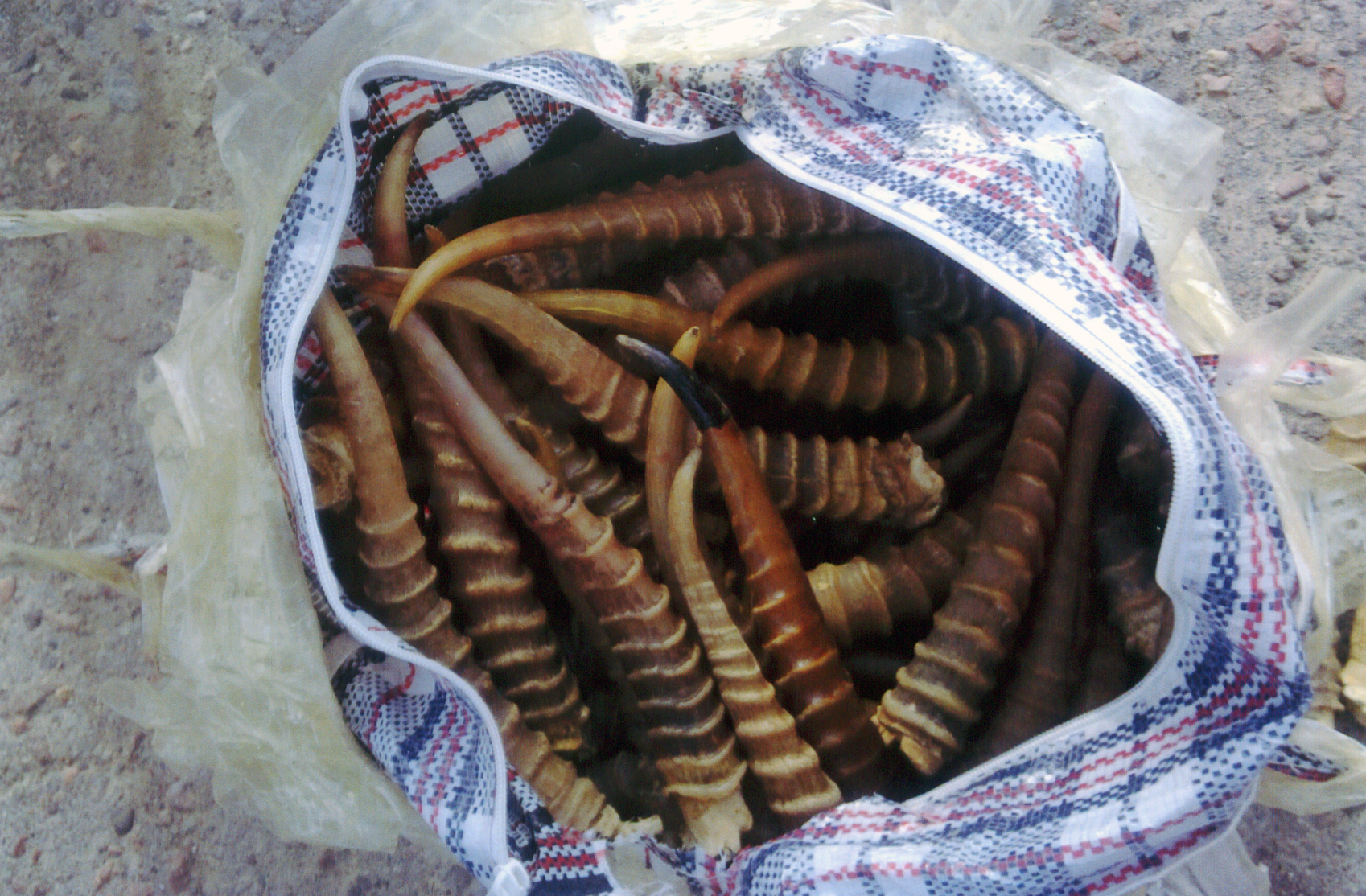
Trade has always been closely linked to saiga conservation. Demand for horn, illegal hunting, trafficking, consumer behaviour, and debates around sustainable use are all part of the same system, so SCA’s work has looked across the trade chain rather than treating these issues separately.
In range states, this has included practical enforcement support. In Uzbekistan, SCA trained customs and border personnel to identify saiga products and respond to wildlife trafficking. At the same time, SCA-supported research in Singapore examined saiga horn consumption and how behaviour-change approaches might reduce demand, while other collaborators began investigating online trade.
A major milestone came in 2020 with The Sustainable Use of Saiga Antelopes: Perspectives and Prospects, prepared by SCA for Germany’s Federal Agency for Nature Conservation and CMS. The report brought together ecological, social, management, and trade evidence and set out the conditions that would need to be met before any sustainable use could be considered.
From 2022, SCA took a more integrated approach through the U.S. Fish and Wildlife Service-supported Building a Collaborative Foundation for Evidence-Based Saiga Antelope Conservation. The programme connected projects working across the trade and conservation system, supported knowledge exchange, identified evidence gaps, and strengthened links between range and consumer countries. It was paused in January 2025 before its planned completion, and SCA has since been working to bring the programme to an orderly close while retaining the evidence and relationships developed through it.
With thanks to our funders
This work has been supported through different phases by the Bundesamt für Naturschutz, the Convention on Migratory Species, the U.S. Fish and Wildlife Service, the Wildlife Conservation Network, Cooper Fund, and other supporters of SCA’s research, policy, and conservation work.
Project partners
This work has involved the Convention on Migratory Species, CITES, wildlife-trade specialists, range-state governments and enforcement agencies, researchers in consumer and range countries, universities, and members of the wider international saiga conservation community.
Year by year
Key project milestones
Explore the project’s journey over time. Click each year to discover key activities, developments, and milestones.
With U.S. Fish and Wildlife Service support, SCA connected projects working across saiga trade and conservation, supported knowledge exchange, and identified shared evidence gaps. The programme was paused in January 2025 before its planned completion, with some elements now being completed with support from WCN and The Cooper Fund.
SCA prepared The Sustainable Use of Saiga Antelopes: Perspectives and Prospects, bringing together evidence on population dynamics, harvesting, management, CITES, trade, and stockpile issues.
SCA worked with researchers monitoring online trade in Russian-, Chinese-, and other markets, extending the programme beyond physical trade routes and enforcement.
Research led by Hunter Doughty examined who was consuming saiga horn, why they used it, and how behaviour-change approaches might reduce demand.
SCA delivered wildlife-trade training for customs and border personnel in Uzbekistan, supported by practical manuals, posters, and anti-poaching materials.
Related work
Explore similar projects
Support our work
Help keep saigas on the steppe
Every donation contributes to vital conservation work, from protecting saigas in the wild to advancing research, education, and international cooperation.
Your support helps make saiga conservation possible.