
Project
Human-Saiga Coexistence in Kazakhstan
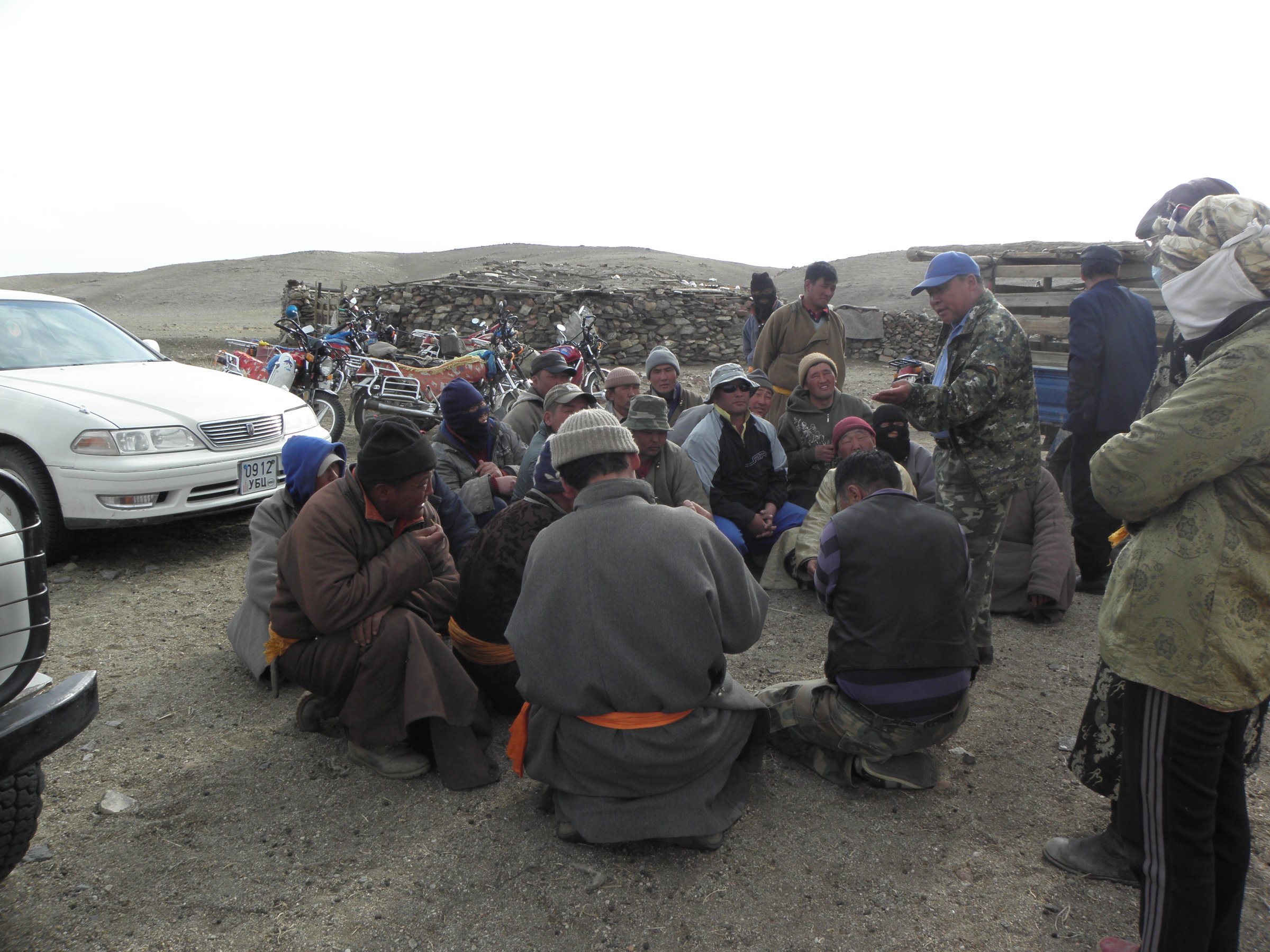
Kazakhstan’s extraordinary recovery of saiga populations has created a new conservation challenge. In parts of West Kazakhstan, large numbers of saigas now share landscapes with livestock, hayfields, water points, and rural communities. As populations have recovered, concerns about competition for pasture, damage to agricultural land, and pressure on water have become increasingly prominent.
SCA’s involvement in this issue did not begin with the current programme. Earlier SCA-supported research has helped build an evidence base around how people and saigas use the same landscapes. In 2023, SCA Small Grant recipient Aibat Muzbay studied the interaction between the growing Ural saiga population, vegetation, agricultural land, and livestock in West Kazakhstan. His team mapped calving areas and farmland, documented vegetation, and interviewed farmers about their experiences of living alongside saigas. The work identified five important calving areas in 2023, monitored around 210,000 saigas, and documented approximately 130 vegetation plots.
SCA is now developing a broader programme focused explicitly on coexistence. The aim is to move beyond a narrow choice between tolerating damage or excluding saigas, and instead examine the full range of approaches used internationally to manage conflict between people and large wild herbivores.
Current discussions in Kazakhstan include deterrents, fencing, population management, and other immediate responses. Each has potential consequences. In an open steppe ecosystem, for example, poorly planned fencing can interfere with migration, while deterrents may simply move conflict elsewhere. SCA’s developing programme is therefore focused on bringing ecological evidence together with rural livelihoods, community perspectives, compensation and benefit-sharing approaches, land-use planning, water management, and adaptive monitoring.
A proposed next phase centres on a policy and learning exchange linked to the 2027 International Conference on Human-Wildlife Conflict and Coexistence. SCA is seeking support for Kazakh government, NGO, and technical representatives to engage directly with international specialists and translate relevant lessons into practical guidance for Kazakhstan. Proposed outputs include a technical review of human-ungulate coexistence approaches, a policy brief for Kazakh decision-makers, and follow-up work in Kazakhstan.
The challenge is a consequence of conservation success. Protecting that success now means finding ways for recovered saiga populations and rural communities to share the steppe over the long term.
Related work
Explore similar projects
Support our work
Help keep saigas on the steppe
Every donation contributes to vital conservation work, from protecting saigas in the wild to advancing research, education, and international cooperation.
Your support helps make saiga conservation possible.